




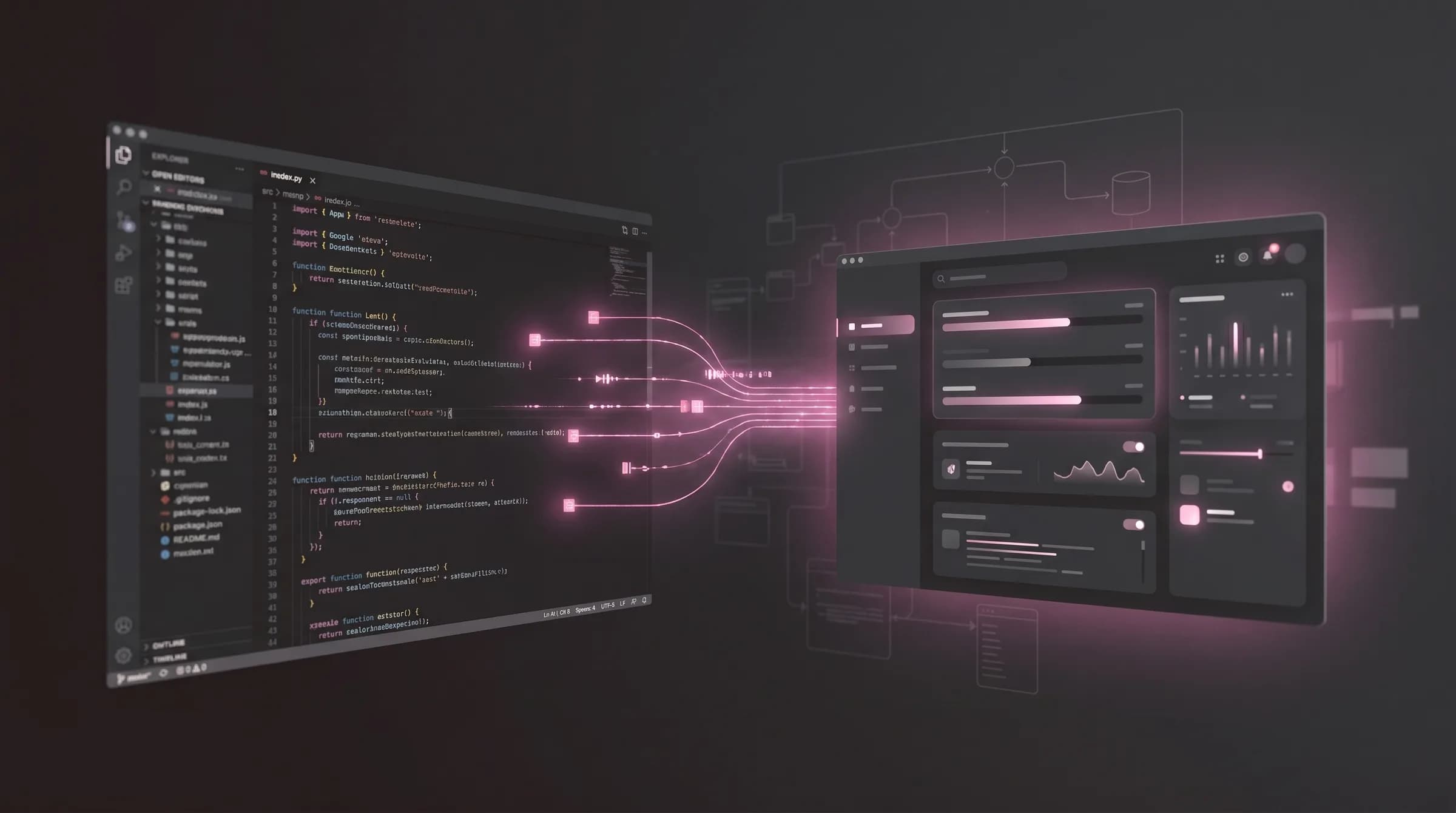
Custom software development
Software written for the way your business actually works, when the off-the-shelf option would mean changing the business to suit the software. We scope it in phases that each stand alone, so the first one ships before the second is agreed.
- PhaseScoped and quoted
- LiveBefore phase two
- YoursCode and accounts
- DocsDated at handover
Sectors that trust us
What is custom software?
Custom software is built when the process you are supporting is the thing that makes you money, and bending it to fit a package would cost more than writing one. The test is not whether a product exists; it is whether using it would change a decision you are good at.

- Custom or configure?
- Configure first, every time it is possible. Custom software earns its cost only where your process is a genuine advantage rather than an accident of history, and telling those apart is most of what scoping is for.
- Who owns the code?
- You do, from the first commit, in a repository inside your own organisation, with the cloud accounts in your name. There is no licence back to us.
Key takeaways
Standalone phases: each one ships and could be the last.
Hardest part first: built while you can still stop.
Tests included: in the same phase, never a later one.
Quoted before start: priced before the phase begins.
Yours at the end: code, accounts and dated documentation.
Why builds overrun
Where custom builds overrun, and how we scope them.
How they overrun
One big scope, nothing usable until the end.
Estimated before the hard part is known.
Tests are a later phase that is never funded.
Handover is a conversation on the final Friday.
Requirements gathered from managers, not operators.
The vendor keeps the repository and the accounts.
How we scope
Phases that each stand alone and each ship.
The hardest part is built first, on purpose.
Tests ship with the feature they cover.
Handover is written as the work happens.
The people doing the work shape the screens.
Repository and accounts in your name from day one.
What we build
Custom software, built and shipped one phase at a time.
Operations tools
The screens your team lives in.
Customer portals
Self-service for what arrives as calls today.
Workflow and approval engines
Approvals and routing, with a complete trail of who decided what.
Pricing and quoting
Versioned rules, so old quotes explain themselves.
Reporting surfaces
The few numbers people read, computed once.
Admin and audit
Roles, permissions and a record of every change that mattered.
Where we have built
Sector knowledge built in, not bolted on.
From clinical tools to lending systems, the rules of the sector shape the build.
Banking and fintech
Ledgers, onboarding and the audit trail regulators ask for.
Healthcare
Scheduling, records and care-team tools built with clinicians.
Logistics
Tracking, routing and warehouse systems.
Retail and e-commerce
Storefronts, stock visibility and order flows.
Government
Citizen portals and case management, Arabic first.
Real estate and more
Property, insurance, energy and education platforms.
What we build with
Boring where it should be, current where it counts.
- TypeScript
- Next.js
- NestJS
- PostgreSQL
- Redis
- Kafka
- Flutter
- Docker
- Kubernetes
- AWS
How it works · our method
The SiaSol five-phase method, applied to this service.
- 01
Discover
Most technology projects fail long before the first line of code — they fail at the question.
- 02
Diagnose
Every slow process has an owner and a cost.
- 03
Design
Architecture is a set of decisions you live with.
- 04
Deliver
Software not in production is just cost.
- 05
Evolve
The handover is the point, not the end.
Where we work
Close where it counts, bilingual everywhere
Egypt: Cairo (HQ) and nationwide delivery
Saudi Arabia: Riyadh, with teams on client time zones
Gulf and beyond: Arabic and English, one delivery standard
Cost & engagement
Custom software: what each phase costs and what it buys
Cost is quoted per phase, and every phase is scoped before it is quoted. Scoping carries a fixed price of its own, because a free scope is simply paid for later, inside the estimate it produced.
- Fixed · one to two weeks
Scoping
The phase plan, the risks named, and a number against each phase.
- Per phase · fixed after scoping
One phase
Built, tested, deployed and in front of real users.
- Monthly · dedicated
Embedded team
A standing team working through a roadmap of phases.
Why teams across the Gulf and Egypt choose SiaSol to build their custom software
We build from Cairo, Riyadh and Dubai for clients across the Gulf and Egypt, in Arabic and English, inside your working day. The first phase takes the piece we are least sure of and ships it to real users, and when a package would serve you better we say so before you pay for a build.
Proof
Software we have built, and what it changed
FAQ
What to ask about Custom software development.
01Should we not just buy a package?
02How accurate are your phase estimates?
03Can we stop after the first phase?
04Who owns the code that you write?
05What if our requirements change mid-build?
06Do you work with our existing developers?
07What happens after the last phase?
08How long does a typical phase take?
Related services
Often paired with this
- View
Product engineering
The whole product shipped as one system, tests and all.
Software & Product - View
Nearshore engineering teams
Senior engineers on your hours, in your standups.
Software & Product - View
Mobile applications
Cross-platform or native — whichever the case earns.
Software & Product



Learn more
From the journal
- Engineering
The handover is the product
If a competent engineer cannot run your system without us, we did not finish. What a real handover contains: the runbook, the access, the failure drills, and the written list of everything that still depends on a person's memory.
2026-09-24Read - Engineering
Arabic is not a translation layer
Right-to-left is a layout decision, not a string swap. The six places a mirrored interface breaks: numerals, dates, icons with a direction, mixed-script lines, truncation, and the forms where the cursor lands on the wrong side.
2026-09-16Read - Engineering
What an integration actually costs
The API call is the cheap part. The expensive part is deciding what happens when it fails at 2am: who is paged, what is retried, what is written down and what is quietly dropped. A costing method that counts the failure paths first.
2026-09-09Read






Ready to scope the first phase?
Tell us the process that does not fit a package, and what it costs you today. We come back with phases and numbers.
Book scoping